
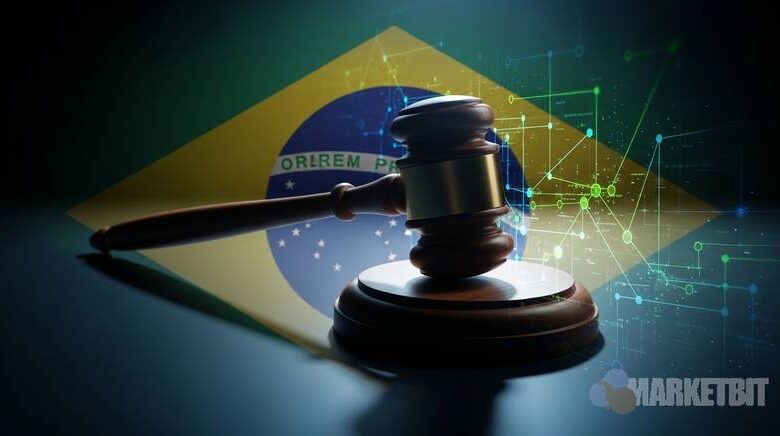
Brazil has enacted a new criminal law authorizing law enforcement to confiscate Bitcoin and other cryptocurrencies connected to criminal activity, marking the country’s sharpest regulatory escalation since it legalized digital assets in 2022.
Confiscation Powers, Covered Offenses, and How Seized Crypto Gets Redeployed
The legislation grants Brazilian authorities the power to seize, liquidate, and redeploy digital assets tied to criminal proceedings. Seized crypto will be funneled into a public security fund, effectively converting confiscated Bitcoin into a law enforcement financing mechanism.
Under the new framework, police can not only freeze but permanently confiscate and spend seized digital currencies. The law covers crypto assets linked to offenses including money laundering, fraud, and other financial crimes, as CCN reported.
This goes beyond prior Brazilian enforcement practice, where authorities could freeze crypto wallets during investigations but lacked a clear statutory mechanism for permanent confiscation. The new statute provides that mechanism, giving agencies a defined legal pathway to liquidate digital assets and allocate proceeds.
The law applies broadly to digital assets, not just Bitcoin, though Bitcoin’s market dominance makes it the most likely target for large-scale seizure proceedings. Whether enforcement will focus primarily on exchanges, retail users, or both remains to be clarified in forthcoming implementing regulations.
The regulatory move comes as crypto markets continue navigating mixed signals globally. In other developments, XRP ETF products recently broke a four-month positive netflow streak, illustrating how regulatory and structural shifts can quickly alter institutional fund flows.
From 2022 Legalization to 2026 Criminal Enforcement: Brazil’s Tightening Regulatory Arc
Brazil first established a legal framework for virtual assets in December 2022 with Lei 14.478 (the Virtual Asset Act), which recognized cryptocurrencies as legal payment instruments. The Banco Central do Brasil assumed regulatory oversight of crypto service providers in 2023.
The new criminal statute represents a distinct escalation. Where the 2022 law focused on legitimizing and regulating the market, the 2026 law focuses squarely on enforcement and penalties, as Cryptonomist detailed in its reform analysis.
Brazil ranks among the top five countries globally for crypto adoption, according to Chainalysis’s Geography of Cryptocurrency reports. The shift from a permissive regulatory stance to one that includes criminal confiscation tools signals that lawmakers view crypto-related crime as a growing enforcement priority in Latin America’s largest economy.
The key regulatory milestones now form a clear trajectory: legalization in December 2022, central bank oversight in 2023, and criminal confiscation authority in 2026. Each step has tightened the compliance burden on exchanges and service providers operating in Brazil.
Crypto exchanges serving Brazilian users face the greatest near-term enforcement exposure, particularly those that have not yet implemented full Know Your Customer and anti-money laundering protocols aligned with Receita Federal (Brazil’s tax authority) disclosure requirements. Large on-chain movements, such as the recent 90 million ADA deposit to Binance that rattled Cardano’s price, demonstrate how exchange flows already attract market scrutiny.
Traders and institutions should monitor how Brazilian enforcement agencies begin applying these confiscation powers in the coming months. The next catalyst will be the publication of secondary regulations and procedural guidelines that define asset seizure thresholds and liquidation timelines. Meanwhile, developments like Ripple’s stablecoin testing on the XRP Ledger show that compliance-focused infrastructure is becoming a competitive differentiator as regulatory environments tighten globally.
Disclaimer: This article is for informational purposes only and does not constitute financial or investment advice. Cryptocurrency and digital asset markets carry significant risk. Always do your own research before making decisions.