

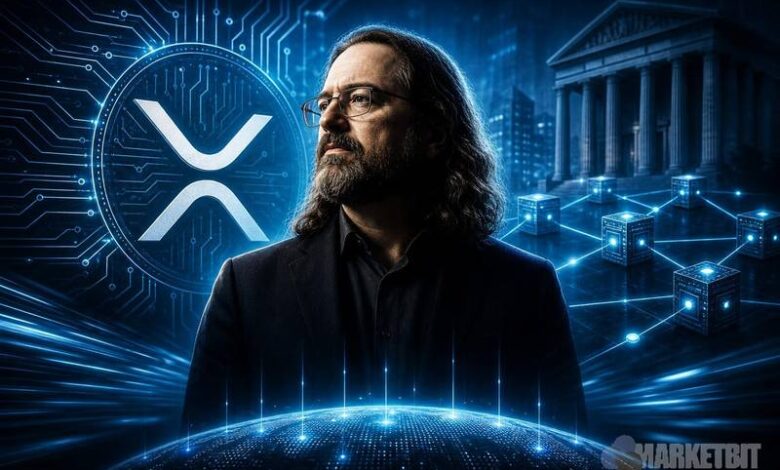
Ripple CTO David Schwartz has joined the XRP Ledger Foundation’s leadership team, a move that ties one of the network’s original architects more directly to the independent body overseeing XRPL’s open-source development and governance.
What Happened With Schwartz and the XRP Ledger Foundation
The appointment was announced as part of a broader leadership restructuring at the XRP Ledger Foundation, according to a report detailing the foundation’s new leadership team. Schwartz, who has served as Ripple’s chief technology officer and is widely recognized as one of the original developers of the XRP Ledger, now holds a role within the foundation that stewards the network’s open-source codebase.
The XRP Ledger Foundation operates as an independent entity focused on the growth and development of XRPL infrastructure. It funds grants, supports developer tooling, and coordinates ecosystem initiatives separate from Ripple Labs’ commercial operations.
The timing of the restructuring places Schwartz’s appointment alongside a period of increased attention to foundation governance across the crypto industry, as several major blockchain ecosystems navigate leadership transitions and community expectations around transparency.
Why the Appointment Matters for XRPL Governance
Schwartz’s addition to the foundation’s leadership bridges a gap between Ripple’s institutional influence and the community-driven governance model that the XRPL Foundation was designed to promote. As one of the ledger’s original creators, his technical authority within the ecosystem carries significant weight for developers and validators alike.
For developers building on XRPL, the appointment could signal stronger coordination between Ripple’s engineering priorities and the foundation’s open-source roadmap. Developer confidence in a network often hinges on whether leadership changes bring clearer technical direction or fragment decision-making.
The move also raises questions about the degree of separation between Ripple and the foundation. XRPL was designed to operate independently of any single company, and community members have historically watched for signs that Ripple’s commercial interests could influence the network’s neutral governance. Schwartz’s dual role will likely draw scrutiny on that front.
This kind of governance scrutiny is not unique to XRP. Recent debates around regulatory accountability in crypto leadership and protocol-level security decisions show that community trust in leadership structures remains a central concern across the industry.
What XRP Users and Investors May Watch Next
The most immediate signal to track is whether the foundation publishes an updated roadmap or set of priorities following the leadership change. Any shifts in grant allocation, protocol upgrade timelines, or ecosystem messaging could indicate Schwartz’s early influence on the foundation’s direction.
Coordination between Ripple’s enterprise-facing products and the XRPL’s open-source tooling is another area to monitor. If Schwartz’s presence accelerates feature development or attracts new projects to build on the ledger, that would be a tangible outcome of the appointment.
Community governance proposals and developer sentiment in the weeks ahead will also serve as a barometer. Whether the XRPL builder community views this as a consolidation of influence or a welcome infusion of technical leadership will shape the appointment’s longer-term significance for the network.
Disclaimer: This article is for informational purposes only and does not constitute financial or investment advice. Cryptocurrency and digital asset markets carry significant risk. Always do your own research before making decisions.