


A sharp Bitcoin sell-off triggered more than $657 million in liquidations across the crypto derivatives market, punishing leveraged traders and dragging sentiment into fear territory.
The decline saw Bitcoin crash 7.53% in 24 hours to $67,788, with the move extending into the Asian trading session. Overleveraged long positions were caught off guard as the sell-off accelerated and liquidations more than doubled from earlier levels.
What Triggered the Bitcoin Drop
Bitcoin had been trading near cycle highs before the reversal, with leverage building steadily across derivatives exchanges. No single protocol failure or regulatory event sparked the move; broader risk-off sentiment tied to U.S. policy uncertainty and macroeconomic repricing weighed on leveraged crypto positions.
The speed of the decline was the defining feature. A 7.53% drop in a single session is significant for an asset of Bitcoin’s size, and the sell-off dragged altcoins and derivative positions down with it. Similar sudden moves have historically preceded extended volatility, as seen when the Verus-Ethereum exploit drained $11.6 million and rattled investor confidence across DeFi markets.
How $657 Million Was Wiped Out Across the Market
Coinglass data cited by FXStreet put total liquidations at $657.18 million during the 24-hour window. Liquidations occur when leveraged futures positions are forcibly closed by exchanges after a trader’s collateral falls below the maintenance threshold.
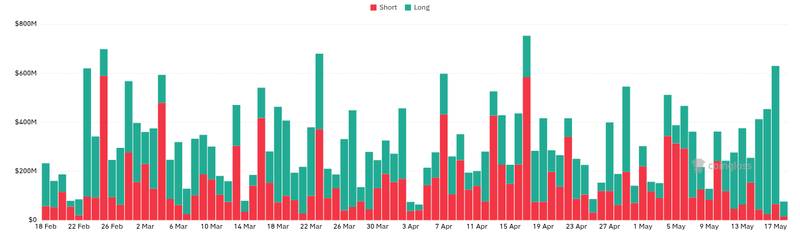
A separate event tracked by CoinMarketCap Academy recorded over $505 million in liquidations after Bitcoin fell further from $67,600 to $64,435. The successive rounds of forced closures suggest damage continued in waves rather than a single flush.
The scale of the wipeout reflects how crowded the long side had become. When Bitcoin moved against those positions, forced selling created a feedback loop: liquidations pushed prices lower, triggering more liquidations. The pattern echoes other recent episodes where concentrated leverage amplified losses, much like the $431,000 USDT fake gold scam in Kenya illustrated how quickly large sums can vanish in crypto markets.
What Traders Are Watching After the Sell-Off
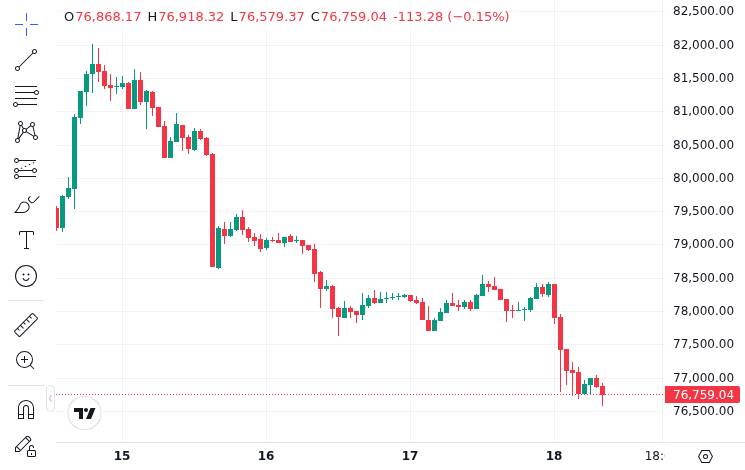
Bitcoin was trading at $76,752 at press time, down 1.68% over 24 hours with a market cap near $1.54 trillion and 24-hour volume of $22.4 billion. The partial recovery from lows near $64,000 has not erased the damage to positioning.
The Fear & Greed Index sits at 28, firmly in “Fear” territory. That defensive reading aligns with elevated liquidation risk when open interest rebuilds after a flush of this magnitude.
The immediate question is whether the deleveraging is complete. When hundreds of millions in positions are liquidated in a single session, open interest drops sharply, reducing fuel for further cascading sell-offs. But if new leverage rebuilds quickly at lower prices, the risk of another squeeze remains.
Institutional interest in the broader crypto market has not disappeared despite the turbulence. Italy’s largest bank reportedly added Bitcoin, Ether, and XRP exposure in Q1, a sign that longer-term allocators view drawdowns differently than leveraged futures traders.
Funding rates across major exchanges will be a key indicator in coming sessions. Persistently negative funding would suggest traders remain skewed short, which could paradoxically set up a short squeeze. Neutral or slightly positive rates would indicate healthier positioning after the flush.
Disclaimer: This article is for informational purposes only and does not constitute financial or investment advice. Cryptocurrency and digital asset markets carry significant risk. Always do your own research before making decisions.