
Colombian President Says Clean-Energy Bitcoin Mining Could Draw Investment to Venezuela

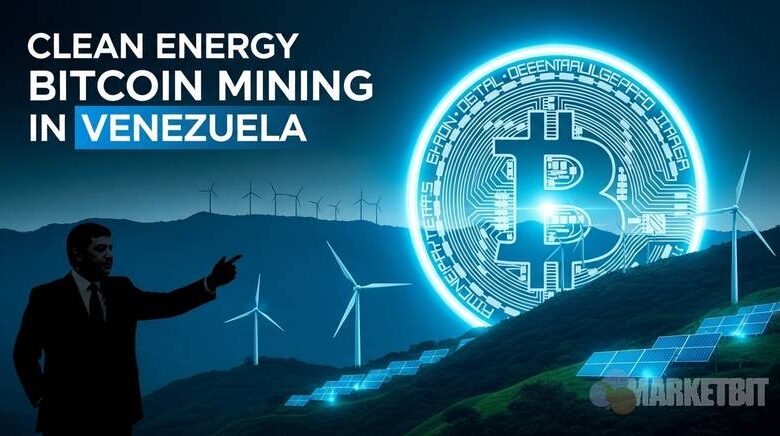
Colombian President Gustavo Petro has publicly stated that Bitcoin mining powered by clean energy could attract major investments to Venezuela, framing the proposition as an economic opportunity tied to the region’s renewable energy potential.
The statement, shared by Petro on his official X account, positions Bitcoin mining not as a speculative venture but as an infrastructure play linked to energy abundance. It is worth noting this is a forward-looking political claim, not a confirmed investment outcome.
Colombian media outlet RTVC Noticias reported on the debate surrounding Petro’s remarks, connecting them to broader discussions about Bitcoin and clean energy in Latin America.
Why the Statement Links Bitcoin Mining to Investment Inflows
The core thesis is straightforward: countries with surplus clean energy can convert that power into economic activity through Bitcoin mining, which in turn attracts foreign capital seeking low-cost, sustainable operations.
Petro’s argument specifically names Venezuela as a beneficiary. The logic rests on Venezuela’s existing hydroelectric capacity, which could theoretically power mining operations at competitive rates without the carbon footprint that has drawn criticism to mining elsewhere.
This framing echoes a pattern seen across Latin America, where political leaders have explored Bitcoin mining as a way to monetize stranded energy assets. Reports of large-scale Bitcoin accumulation by institutional players suggest that demand for mined supply remains robust.
However, the statement remains an opinion, not a policy announcement. No specific investment figures, project timelines, or corporate partners have been named in connection with this proposal.
What Clean Energy Changes in the Venezuela Mining Narrative
The clean-energy qualifier is the differentiating factor. Bitcoin mining has faced sustained criticism over its carbon intensity, particularly when powered by fossil fuels. By tying the proposal to renewables, Petro reframes the conversation around environmental credibility.
For institutional investors and ESG-conscious funds, the energy source matters. Mining operations powered by verified clean energy can attract capital that would otherwise avoid the sector entirely due to sustainability mandates.
Venezuela’s energy profile is relevant here. The country holds significant hydroelectric infrastructure, notably the Guri Dam complex. In theory, excess capacity from these facilities could supply mining operations without competing with residential or industrial demand.
The reputational dimension also matters. As figures like Arthur Hayes have argued that crypto operates outside traditional regulatory frameworks, the clean-energy angle offers a different path to legitimacy, one based on environmental performance rather than regulatory compliance.
What Would Need to Happen for the Investment Case to Hold
Political statements and capital deployment are separated by significant execution gaps. For Petro’s thesis to materialize, several conditions would need alignment.
First, Venezuela’s regulatory environment would need to provide clarity for foreign mining operators. The country remains subject to U.S. Treasury OFAC sanctions, which complicate any foreign investment flows and create legal risk for international participants.
Second, the physical infrastructure must exist to support large-scale mining. Grid reliability, connectivity, and maintenance capacity all factor into whether clean energy can be consistently delivered to mining facilities.
Third, investor confidence depends on more than rhetoric. As seen with Strategy’s Bitcoin treasury approach, institutional capital follows clear governance structures and predictable operating environments.
The gap between a presidential statement and deployed capital is wide. Without named investors, signed agreements, or regulatory frameworks, the claim remains aspirational. Whether Venezuela can convert this narrative into operational mining facilities will depend on execution that extends far beyond any single political endorsement.
Disclaimer: This article is for informational purposes only and does not constitute financial or investment advice. Cryptocurrency and digital asset markets carry significant risk. Always do your own research before making decisions.