


Elon Musk weighed in on the growing quantum computing debate in crypto on March 31, 2026, pointing to what he called a silver lining of future quantum-enabled wallet compromise: people who forgot their wallet passwords could eventually get their funds back.
The remark, posted on X, arrived one day after Google Quantum AI published a whitepaper outlining how a sufficiently powerful quantum computer could break Bitcoin’s elliptic-curve cryptography in minutes. The timing turned a niche security discussion into a mainstream talking point.
What Elon Musk Said About Quantum Crypto Hacks
Musk’s post was brief and characteristically tongue-in-cheek. He framed the hypothetical ability of quantum computers to crack wallet keys as a net positive for anyone locked out of their own holdings.
On the plus side, if you forgot the password to your wallet, it will be accessible in the future https://t.co/xAFtNGC5FE
— Elon Musk (@elonmusk) March 31, 2026
Source: @elonmusk on X
The comment is surprising because it reframes what most of the crypto industry treats as an existential threat as a potential convenience. The technical reality is more complicated than the quip suggests: whether a quantum computer could “recover” a wallet depends on the wallet design, whether the public key has been exposed on-chain, and whether the barrier is a forgotten password, a lost seed phrase, or an irretrievable private key.
Still, the remark resonated because it arrived during a period of renewed attention on Musk’s crypto commentary and landed squarely on a topic already dominating security research circles.
The catalyst behind Musk’s post was a Google Quantum AI whitepaper published March 30, 2026. The paper modeled how a quantum computer could break the secp256k1 elliptic-curve discrete logarithm problem, the cryptographic foundation securing Bitcoin private keys.
The paper’s core finding: breaking secp256k1 could be done in minutes using fewer than 500,000 physical qubits. That qubit count is still beyond current hardware, but it is within the range that major quantum labs are actively targeting.
Why Quantum Threats Could Push Crypto Security Forward
Google estimated that an on-spend attack, one that intercepts a transaction while it is waiting for confirmation, would take roughly nine minutes. Against Bitcoin’s average 10-minute block time, that implies a roughly 41% theft risk per vulnerable transaction.
The paper also quantified dormant exposure. More than 1.7 million BTC held in legacy Pay-to-Public-Key (P2PK) scripts have their public keys permanently exposed on-chain, making them directly vulnerable. An additional 2.3 million BTC sit in dormant addresses that raise what the paper termed “digital salvage” policy questions, essentially asking who has the right to claim coins from wallets whose owners may be deceased or permanently locked out.
That dormant-asset angle is precisely the dynamic Musk’s joke referenced, and it is arguably the most underreported dimension of the quantum risk conversation. While many discussions of Bitcoin security threats focus on active attack scenarios, the policy implications of quantum-accessible dormant wallets are distinct and unresolved.
Musk’s framing, treating quantum risk as a catalyst rather than a catastrophe, echoes a pattern familiar in cybersecurity: visible threats accelerate defensive upgrades. The specificity of Google’s numbers has already shifted the conversation from abstract concern to concrete engineering timelines.
On the standards front, the National Institute of Standards and Technology (NIST) finalized its first three post-quantum cryptography standards, FIPS 203, 204, and 205, on August 13, 2024. NIST explicitly urged system administrators to begin integrating the new algorithms immediately, signaling that post-quantum migration is already an active priority at the federal level.
On the protocol side, the Ethereum Foundation lists Post-Quantum Ethereum as an active cryptography research workstream on its dedicated cryptography research portal, indicating that at least one major Layer 1 network is treating the transition as a live engineering problem. That work sits alongside broader infrastructure shifts across blockchain ecosystems aimed at long-term resilience.
Bitcoin’s own migration path is less clearly defined. The network’s conservative upgrade culture, which prioritizes stability over rapid feature deployment, means any post-quantum cryptographic transition would likely require years of community deliberation before activation. The 1.7 million BTC in P2PK scripts cannot be migrated by their holders because the vulnerable key format is baked into the original transaction type.
What Musk’s Comment Means for the Crypto Market
The quantum discussion is unfolding against a backdrop of extreme caution in crypto markets. Bitcoin traded at $66,798 at the time of Musk’s post, down 0.86% over the prior 24 hours.
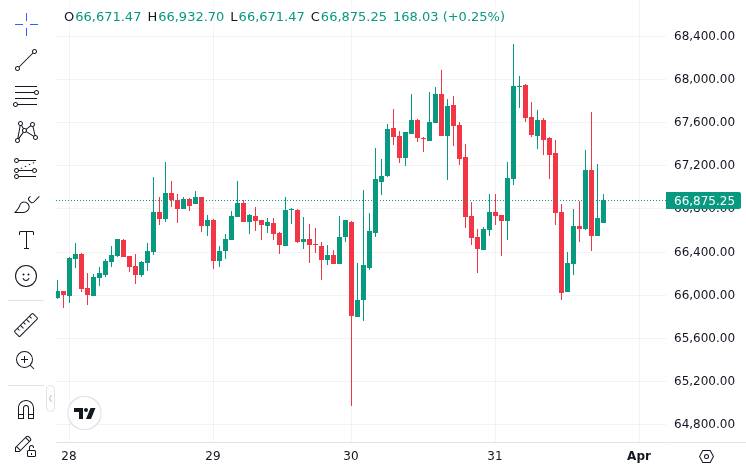
The Fear and Greed Index sat at 11, deep in “Extreme Fear” territory. That reading reflects broader macro anxiety rather than quantum-specific panic, but the timing means Musk’s comment landed in a market already primed for negative narratives.
For investors, the practical takeaway is less about Musk’s joke and more about the accelerating timeline of the underlying research. Google’s whitepaper moved the conversation from “decades away” to specific qubit counts and attack durations. NIST’s completed standards mean the cryptographic tools for defense already exist; the question is how quickly blockchain protocols adopt them.
The dormant-wallet dimension also introduces a novel variable for long-term Bitcoin supply models. If quantum capability eventually makes 2.3 million dormant BTC theoretically accessible, the legal and governance frameworks around those coins become material questions for market participants, particularly as broader security concerns continue to shape crypto investor sentiment.
No quantum computer currently exists that can execute the attacks described in Google’s paper. The timeline for such hardware remains debated, with estimates ranging from five to fifteen years. What has changed is that the specific technical requirements are now quantified, the defensive standards are published, and the policy questions are on the table.
Disclaimer: This article is for informational purposes only and does not constitute financial or investment advice. Cryptocurrency and digital asset markets carry significant risk. Always do your own research before making decisions.