


<!DOCTYPE html>
Fidelity is framing Bitcoin’s latest rebound as a rotation trade, with gold losing momentum as BTC regains footing. The key point is that “winning back” describes a change in investor preference, not conclusive proof that gold has lost its role as a hedge.
Fidelity: Bitcoin Is Winning Back Gold Investors
In an April 3, 2026 post from Jurrien Timmer, Timmer said exchange-traded product flows that left Bitcoin after last October’s peak and moved into gold have now started to reverse. That framing matters, but it remains a single-source interpretation because the supplied evidence does not include a standalone gold-versus-Bitcoin ETP dataset that quantifies the full size of the rotation.
- On April 3, 2026, Timmer said Bitcoin ETP money that had rotated into gold after last October was now reversing back toward BTC.
- CoinShares reported US$1.06 billion of weekly inflows into digital asset products, with US$793 million, or 75%, allocated to Bitcoin.
- Decrypt reported Bitcoin was up about 6% to 6.5% since the Iran crisis began, versus gold’s roughly 1% to 1.5% gain, giving the rotation thesis a relative-performance backdrop.
| Metric | Reading | Market read |
|---|---|---|
| Weekly digital-asset inflows | US$1.06 billion | Another positive week for crypto products. |
| Weekly Bitcoin inflows | US$793 million | Bitcoin captured most of the week’s product demand. |
| Three-week Bitcoin inflow run | US$2.2 billion | Sustained demand, not a brief spike. |
| Bitcoin price backdrop | Near US$66,800 | The asset is large enough for ETP rotation narratives to matter. |
What Fidelity Means by Bitcoin Winning Back Gold Investors
Timmer’s wording is about a relative trade: when Bitcoin rolled over after last October, capital that had favored BTC ETPs moved toward gold, and now that gold’s momentum has cooled, that trade is reversing back toward Bitcoin. Read narrowly, the post supports a change in allocator preference between competing store-of-value assets, not a claim that all gold investors are moving into crypto.
Below we can see that when Bitcoin peaked last October, the ETP flows left Bitcoin and jumped on the gold bandwagon. Now that gold has lost its mojo while Bitcoin is finding its footing, the flows have reversed. To me this is a good way to think about why gold has started acting… pic.twitter.com/DsLECpLvm3
— Jurrien Timmer (@TimmerFidelity) April 3, 2026
On March 16, 2026, CoinShares said digital asset investment products took in US$1.06 billion for another consecutive week, with US$793 million, or 75% of that total going to Bitcoin. The same CoinShares report put the latest Bitcoin inflow run at US$2.2 billion, which gives Timmer’s reversal thesis measurable support on the crypto side even though the matching gold-fund outflow is not published in this brief.
The US$2.2 billion three-week Bitcoin inflow run also lines up with the broader access story in marketbit’s coverage of Charles Schwab to Launch Schwab Crypto for Bitcoin and Ethereum Trading, where legacy finance is building more direct entry points into BTC and ETH. More access does not prove the gold-to-Bitcoin switch, but the multi-week inflow trend helps explain why professional allocators can reweight quickly when relative performance changes.
Why Some Investors May Be Rotating from Gold to Bitcoin
On March 12, 2026, Decrypt reported, citing CoinShares Head of Research James Butterfill, that Bitcoin had risen about 6% to 6.5% since the Iran crisis began while gold was up roughly 1% to 1.5% and equities had declined. That relative gap helps explain why some macro investors may prefer BTC when they want a store-of-value narrative with more upside capture than bullion.
Bitcoin’s size now makes that comparison more consequential: it was trading near US$66,800, keeping its market value near US$1.34 trillion. At roughly US$1.34 trillion, even a modest ETP preference shift can change the market narrative quickly because the flow base is institutional and globally distributed.
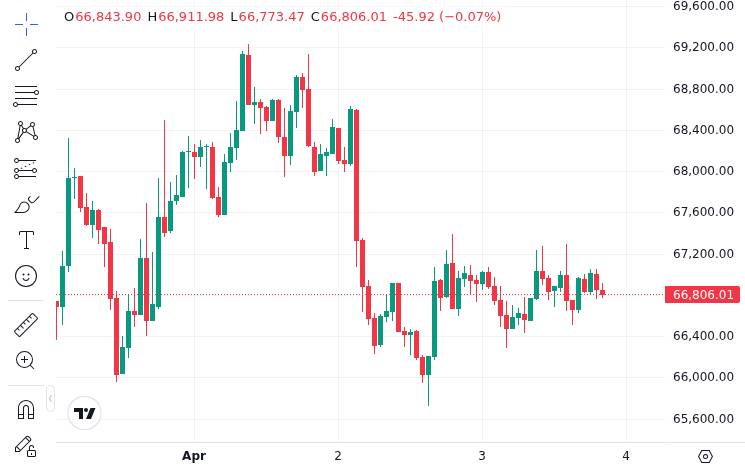
The 6% to 6.5% Bitcoin gain versus gold’s 1% to 1.5% rise also shows that Bitcoin and gold are competing for the same “defensive alternative” slot in many portfolios. That cross-asset contest is visible in marketbit’s coverage of Ripple USD Stablecoin Wins Rare Listing vs Tether, Paxos Gold, where gold-linked crypto exposure and dollar-backed instruments are both chasing defensive capital.
What This Could Mean for Bitcoin Sentiment and the Market Outlook
The immediate implication is that product flows are improving faster than price skepticism. A market that can absorb US$1.06 billion of weekly inflows after a recent US$2.2 billion Bitcoin run is more likely being supported by higher-conviction allocators than by purely short-term chase flows.
That does not make Timmer’s thesis fully proven. Until a comparative gold-ETP dataset shows how much capital actually left bullion products, the cleaner conclusion is that Bitcoin has regained enough traction to capture 75% of a strong crypto-fund week and to outperform gold in the performance window Decrypt described.
What to watch next is simple: whether future CoinShares flow reports keep Bitcoin’s share elevated, and whether the broader use case in marketbit’s report on Bitget Launches Crypto-Linked Payment Card Across APAC Markets is matched by continued institutional buying. If both signals hold, Timmer’s April 3 framing will look less like a one-off macro observation and more like the start of a broader allocation shift.
Disclaimer: This article is for informational purposes only and does not constitute financial or investment advice. Cryptocurrency markets are volatile, and the evidence set for this story does not quantify the full size of any rotation from gold products into Bitcoin.
Disclaimer: This article is for informational purposes only and does not constitute financial or investment advice. Cryptocurrency and digital asset markets carry significant risk. Always do your own research before making decisions.