
Claims that Ledger CTO Charles Guillemet urged tighter crypto security after the Drift Protocol exploit remain indirectly sourced, but the Solana incident itself has already shown why wallet approvals, admin-key hygiene, and clearer signing flows matter across DeFi.
What to Know
- Drift said on April 1, 2026 that it was under active attack and had paused deposits and withdrawals.
- $285 million is the highest public loss estimate so far, but Drift has not confirmed a final total or root cause.
- Clear signing and verification of unsolicited wallet prompts are the two clearest user defenses backed by the sourced material.
Why the Recent Solana DEX Hack Matters
Drift Protocol said on April 1, 2026 that it was “experiencing an active attack,” had suspended deposits and withdrawals, and was coordinating with security firms, bridges, and exchanges to contain the incident.
Decrypt reported that the exploit affected more than $200 million, with some estimates reaching $285 million, while roughly 41 million JLP tokens valued at about $155 million were moved from the Drift Vault to an attacker-linked address beginning around 11:06 a.m. ET.
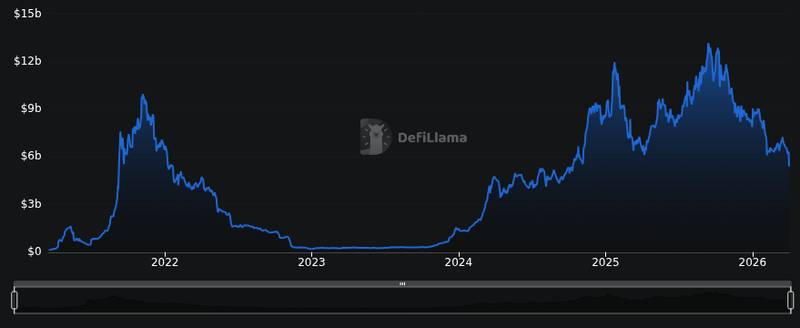
Even after the breach, Solana still carried about $11.87 billion in chain TVL, which is why one DEX exploit quickly became a chain-wide DeFi risk discussion instead of a niche protocol problem.
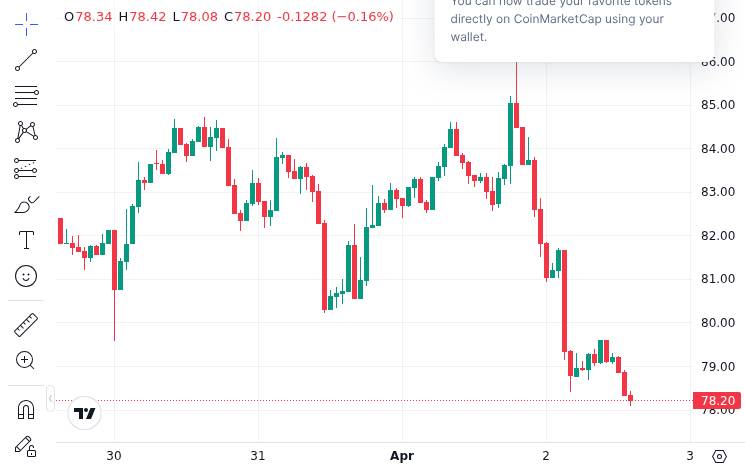
Solana was also trading near $78.29, down 6.09% over 24 hours, which shows the attack landed during an already fragile stretch for risk appetite around the asset.
| Metric | Reading | Why It Matters |
|---|---|---|
| Upper public loss estimate | $285 million | The event immediately scaled beyond protocol-specific damage. |
| JLP transferred | 41 million tokens | The reported movement points to privileged vault access. |
| Solana chain TVL | $11.87 billion | The surrounding ecosystem is large enough for secondary contagion concerns. |
| SOL market move | $78.29, -6.09% | The exploit hit into a market already leaning defensive. |
What Ledger’s CTO Is Warning the Crypto Community About
A single relay report said Ledger CTO Charles Guillemet urged stronger crypto security after the exploit and framed the weakness as operational rather than contract-native, but the original first-party post was not fetched, so that attribution remains indirect.
What is verified is Ledger’s own guidance: the Ledger developer portal says clear signing makes transaction details human-readable, which is directly relevant when a suspected attack path depends on getting authorized signers to approve malicious transactions they do not fully understand.
In the same relay, @P3b7_ noted that the Drift exploit resembled the 2025 Bybit incident and argued the weakness was operational, with multisig signer devices induced to approve malicious transactions rather than a direct smart-contract flaw, but that comparison should also be treated as unconfirmed reporting until a first-party post or forensic report is available.
“The admin keys behind Drift were definitely leaked or compromised.”
Jiang Xuxian, founder of PeckShield, via Decrypt
That assessment fits Decrypt’s description of privileged token movement, but Drift has not yet published a final postmortem confirming whether the root cause was leaked keys, signer compromise, or another control failure.
What Crypto Users Should Review After a DeFi Security Incident
The FBI warned on June 3, 2025 that cybercriminals use reward and airdrop lures against non-custodial wallet users and advised people to verify offers before interacting, which matches the clearest takeaway from the Drift incident: users should not treat every wallet prompt as routine just because it appears inside a familiar interface.
That operational discipline matters most after a protocol has frozen deposits and withdrawals and after public loss estimates have reached $285 million; in that context, the narrative churn that often dominates altcoin coverage, whether traders are focused on XRP’s monthly trend shift versus Bitcoin, Ripple’s spendable-wallet balances, or executive sparring on X, becomes secondary to signer review and wallet hygiene.
For users, the checklist is narrow: prefer wallets and apps that support clear signing, keep long-term funds away from hot approval flows, and stop signing anything new the moment a protocol says deposits or withdrawals are frozen on its official channel.
Outlook
Until Drift publishes a postmortem, the two unanswered variables are the final loss total and the exact failure mode. What can already be said from the sourced data is that a breach serious enough to halt protocol operations on a chain with $11.87 billion in TVL will keep wallet-security standards, signer review, and admin-key controls at the center of Solana DeFi risk management.
Disclaimer: This article is for informational purposes only and does not constitute financial or investment advice. Cryptocurrency and digital asset markets carry significant risk. Always do your own research before making decisions.