
CME Group plans to launch Bitcoin Volatility futures on June 1, 2026, adding a new derivatives product that lets traders isolate bitcoin volatility risk without taking a directional price bet. The move expands CME's regulated crypto lineup beyond standard futures and options into volatility-specific instruments.
The exchange operator announced on May 5 that the new contracts will settle to the CME CF Bitcoin Volatility Index (BVX), a 30-day forward-looking implied volatility benchmark derived from real-time CME Bitcoin options order books. The launch remains pending completion of all regulatory review periods.
The contract will trade under the ticker BVI with a size of $500 multiplied by the CME CF Bitcoin Volatility Index. Contracts are cash-settled and block-eligible, giving institutional participants flexibility in execution.
According to a May 4 Globex operations notice, Bitcoin Volatility Index futures and related BTIC will list effective Sunday, May 31 for trade date Monday, June 1. Customer testing opens on May 17.
What CME's Bitcoin Volatility Launch In June Means
A volatility futures contract lets traders express a view on how much bitcoin's price will swing over the next 30 days, separate from whether it goes up or down. This is distinct from standard bitcoin futures, which track the asset's spot price direction.
The product is CFTC-regulated, positioning it as a compliance-friendly alternative to offshore volatility instruments. Deribit launched its own BTC DVOL futures in March 2023, but that product trades on an unregulated offshore venue. CME's version brings bitcoin volatility trading into the U.S. regulated derivatives framework for the first time.
The underlying BVX index was developed jointly by CME and CF Benchmarks, launching on December 2, 2025. A shorter-term variant, BVXS, launched alongside it. Both indices draw from CME's bitcoin options order books, which handled nearly $46 billion in equivalent notional value during 2025.
How The New Product Fits CME's Broader Crypto Push
CME has built its crypto derivatives business methodically since launching bitcoin futures in December 2017, later adding ether futures, micro-sized contracts, and options. The volatility product fills a gap that equity markets solved years ago with the VIX ecosystem.
For institutions that already trade CME bitcoin options, the volatility futures provide a direct hedging tool. A fund selling bitcoin options, for instance, carries volatility exposure that was previously difficult to isolate on a regulated exchange.
The $46 billion in bitcoin options notional traded on CME in 2025 suggests meaningful institutional activity already exists in the options market. Volatility futures are a natural extension, offering a single contract to trade implied volatility rather than constructing synthetic positions across multiple options strikes.
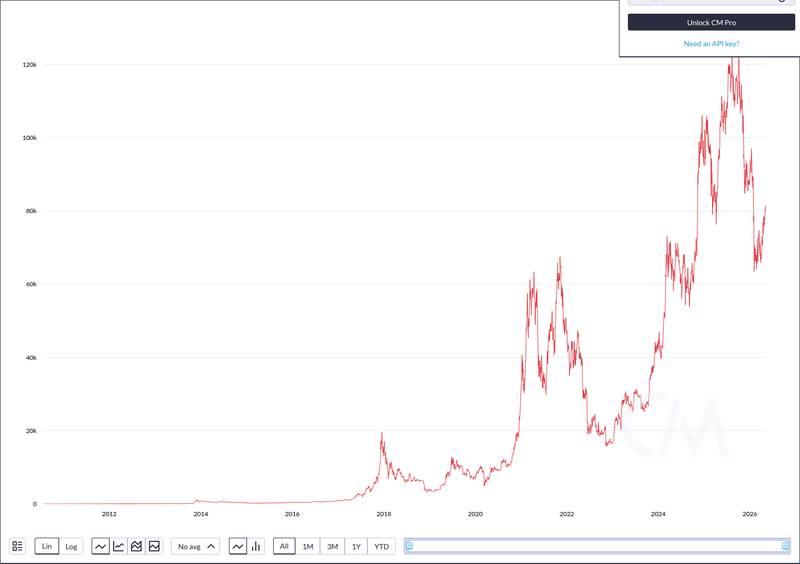
Bitcoin currently trades at $80,786 with a market capitalization of approximately $1.62 trillion. The Fear and Greed Index sits at 47, reflecting neutral sentiment.
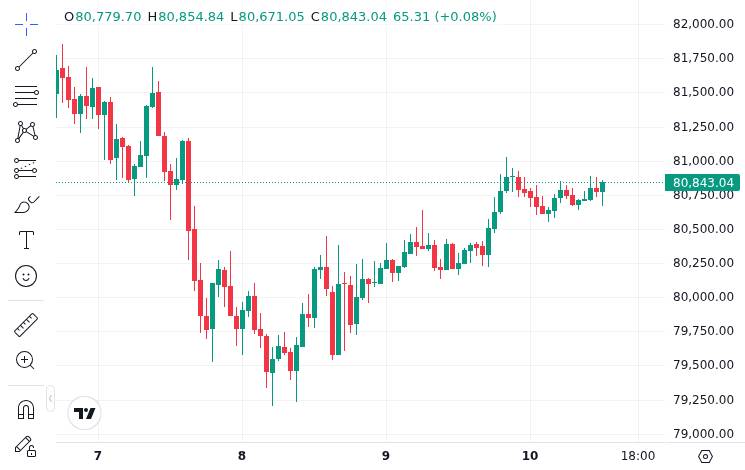
The neutral reading comes as bitcoin's 24-hour trading volume reached $17.7 billion, a figure that reflects steady but not exceptional activity. Major holders like Strategy, which now controls over 4% of Bitcoin's 21 million supply, continue to accumulate, reinforcing institutional conviction in the asset.
What This Could Signal For Bitcoin Traders And The Market
The addition of a regulated volatility product gives traders a new tool to manage risk around events that historically spike bitcoin's implied volatility, such as halving cycles, regulatory decisions, and macroeconomic shifts.
The contract's $500 multiplier makes it accessible relative to CME's standard bitcoin futures (5 BTC notional) while still being sized for institutional use. Block eligibility allows large trades to execute off the central order book, reducing market impact for sizable positions.
CME's move may also pressure offshore venues to improve their volatility products. Deribit's DVOL futures have traded since 2023, but a regulated U.S. competitor could attract capital that was previously reluctant to use offshore platforms, particularly after high-profile exchange controversies that have drawn regulatory scrutiny.
The launch timeline is tight. With customer testing starting May 17 and listing on May 31, market participants have roughly three weeks to prepare. The regulatory caveat remains, though CME's track record of successfully launching crypto derivatives suggests the June 1 date is likely to hold.
The broader trend of traditional financial infrastructure expanding into crypto continues to accelerate. CME's volatility product joins a growing list of institutional-grade tools, from spot bitcoin ETFs to options on those ETFs, that are gradually closing the gap between crypto and traditional asset classes. Even developments in crypto security and fraud prevention reflect the maturing ecosystem that institutional products like this require.
Traders interested in the product can access contract specifications and testing details through CME's cryptocurrency volatility product page ahead of the May 17 testing window.
Disclaimer: This article is for informational purposes only and does not constitute financial or investment advice. Cryptocurrency and digital asset markets carry significant risk. Always do your own research before making decisions.