
Rep. Begich Introduces Bitcoin Bill Framing BTC as Strategically Important to the U.S.

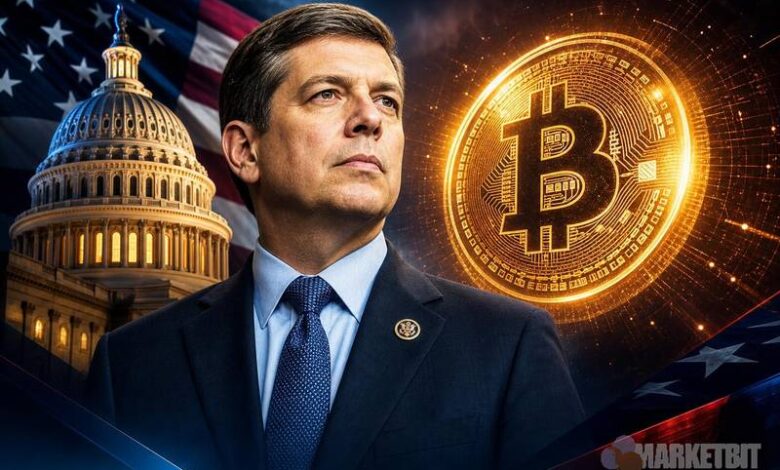
Rep. Nick Begich has introduced federal Bitcoin legislation that explicitly frames the cryptocurrency as a strategic national asset, marking a significant step in the push to codify a U.S. Strategic Bitcoin Reserve into law.
The BITCOIN Act of 2025, filed as H.R.2032, was introduced on March 11, 2025 by Rep. Begich alongside Sen. Cynthia Lummis. The bill was referred to the House Committee on Financial Services the same day.
The legislation would require the U.S. Treasury to purchase one million Bitcoin over five years and hold those reserve assets for a minimum of 20 years. Funding would come through budget-neutral mechanisms.
Begich said the bill is meant to put the strategic bitcoin reserve into law permanently rather than rely only on executive action, according to an interview published on March 11, 2025.
What to Know
- H.R.2032 would direct the Treasury to acquire 1,000,000 BTC over five years and hold them for at least 20 years.
- The bill follows a March 6, 2025 executive order that established a Strategic Bitcoin Reserve using forfeited government-held BTC.
- Legislative introduction does not guarantee passage; the bill must clear the House Financial Services Committee, both chambers, and presidential signature.
Why the ‘Strategic Importance’ Framing Matters
The phrase “strategic importance” in the bill’s framing positions Bitcoin alongside assets like oil reserves and gold stockpiles in the national policy vocabulary. This is not incidental language; it reflects a deliberate effort to move Bitcoin beyond a purely speculative classification at the federal level.
The legislative push builds directly on the White House executive order signed on March 6, 2025, which established a Strategic Bitcoin Reserve capitalized with government-held BTC from forfeiture proceedings. That order stated there is a “strategic advantage to being among the first nations to create a strategic bitcoin reserve.”
The executive order also directed the Treasury and Commerce departments to develop budget-neutral acquisition strategies and evaluate whether follow-on legislation would be needed. H.R.2032 arrived five days later, suggesting a coordinated timeline between the executive branch and congressional sponsors.
At the time the research was compiled, Bitcoin was trading around $77,664, giving scale to the proposed reserve. At that price, acquiring one million BTC would represent a commitment exceeding $77 billion, though the five-year acquisition window means actual costs would depend on market conditions.
The national competitiveness angle is central to the framing. Bitcoin’s fixed supply of 21 million coins was explicitly cited in the White House order as a reason the asset merits strategic treatment, distinguishing it from fiat currencies that can be expanded at will.
What the Proposal Could Mean for Bitcoin Policy and Market Narratives
The introduction of H.R.2032 and the companion Senate bill S.954 represents the congressional attempt to codify and expand the executive order’s framework in statute. If enacted, the reserve would not depend on any single administration’s willingness to maintain it.
For market participants, the distinction between executive action and legislation is significant. Executive orders can be reversed by a successor president; a statute requires a new act of Congress to repeal. This durability factor could shape how institutional investors assess the regulatory trajectory for Bitcoin in the United States, similar to how major financial institutions have been positioning around crypto ETF products.
The bill’s arrival also adds to a broader pattern of U.S. lawmakers engaging directly with cryptocurrency policy. While some states have moved to regulate specific crypto activities at the consumer protection level, H.R.2032 operates at the macroeconomic and national security level, a fundamentally different policy tier.
International context matters as well. As jurisdictions like Dubai expand their crypto regulatory frameworks, the strategic reserve proposal positions the U.S. as a potential sovereign-level Bitcoin holder, not merely a regulator of private-sector activity.
The Fear & Greed Index sat at 29 at the time of the research, indicating a “Fear” reading in the broader crypto market. Legislative proposals of this scale can shift sentiment narratives, though actual market impact depends on whether the bill advances past committee.
H.R.2032 currently sits in the House Financial Services Committee. It must pass that committee, clear both chambers of Congress, and receive a presidential signature before becoming law. Introduction is the first step in a process with no guaranteed outcome.
Disclaimer: This article is for informational purposes only and does not constitute financial or investment advice. Cryptocurrency and digital asset markets carry significant risk. Always do your own research before making decisions.