


A 30-year-old Saipan woman has been sentenced to 71 months in federal prison for a wire fraud scheme that used false claims of Bitcoin investing success to defraud older women across multiple U.S. jurisdictions.
Sze Man Yu Inos, also known as “Yuki,” received the sentence on April 23, 2026 from Chief Judge Ramona V. Manglona in the U.S. District Court for the Northern Mariana Islands, according to a Department of Justice press release. The conviction was for wire fraud under 18 U.S.C. § 1343.
In addition to the prison term, the court imposed three years of supervised release, 100 hours of community service, and $769,355.67 in restitution. A $684,848.34 criminal forfeiture money judgment and a mandatory $200 special assessment were also ordered.
Scheme targeted older women with fake Bitcoin wealth claims
The DOJ stated that the fraud ran from November 2020 through January 2022. Inos targeted older women in Saipan and Guam by falsely presenting herself as wealthy and successful in Bitcoin investing, using those fabricated credentials to gain victims’ trust and their money.
The scheme later expanded beyond the Mariana Islands, defrauding additional victims in Washington and California. The DOJ release describes older women as the primary targets, though exact victim ages were not published.
Shawn N. Anderson, referenced in the DOJ announcement, framed the conduct as exploitative of personal trust.
“Criminals engaged in affinity fraud prey on our willingness to trust others.”
— Shawn N. Anderson, via DOJ
The case fits a broader pattern of cryptocurrency-linked investment scams that federal prosecutors have increasingly targeted. Affinity fraud, where perpetrators exploit shared community ties or relationships to build credibility, has become a recurring element in crypto fraud cases across the country, similar to how evolving digital payment channels continue to reshape how money moves across borders.
Federal data shows billions lost to crypto fraud targeting older Americans
The Inos sentencing arrives against a backdrop of escalating cryptocurrency fraud losses in the United States. The FBI reported on April 6, 2026 that Americans filed 181,565 cryptocurrency-related complaints totaling more than $11 billion in losses during 2025.
Americans over 60 reported approximately $7.7 billion in total fraud losses in the same period, underscoring why schemes like the one Inos operated, which specifically targeted senior victims, draw heightened federal enforcement attention.
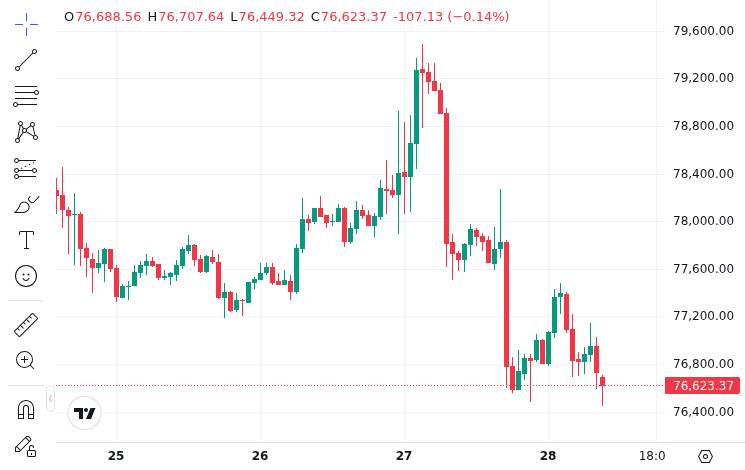
Bitcoin traded at roughly $76,600 at press time, with the broader market registering a Fear & Greed Index score of 33, reflecting a cautious sentiment environment. While this case is an enforcement matter rather than a market event, it reinforces the regulatory scrutiny surrounding crypto-related financial products and the platforms through which they are marketed.
What the 71-month sentence signals for crypto fraud enforcement
A 71-month federal prison sentence, nearly six years, reflects the seriousness with which the court treated this case. Combined with the restitution and forfeiture orders totaling more than $1.4 million, the penalties signal that federal prosecutors and judges are imposing meaningful consequences for cryptocurrency-linked fraud.
The case also illustrates how Bitcoin fraud schemes can begin in small, tight-knit communities like Saipan and Guam before expanding to larger jurisdictions. That geographic spread, reaching victims in Washington and California, elevated the case from a local matter to a multi-state federal prosecution.
The DOJ and FBI jointly investigated the case. For crypto market participants tracking how regulatory frameworks and enforcement actions shape the industry landscape, the Inos sentencing is another data point in an accelerating federal crackdown on fraudulent schemes that exploit digital asset enthusiasm to victimize vulnerable populations.
Disclaimer: This article is for informational purposes only and does not constitute financial or investment advice. Cryptocurrency and digital asset markets carry significant risk. Always do your own research before making decisions.