
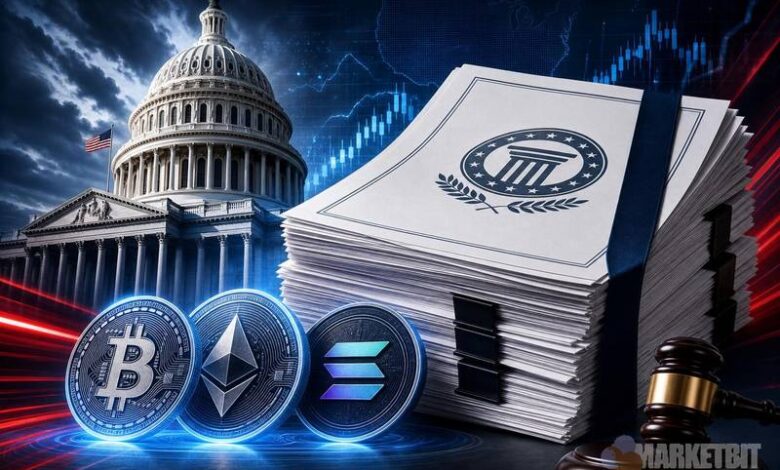
The U.S. Senate has released a 309-page draft of the Clarity Act, a sweeping crypto bill that represents one of the most substantial legislative efforts to date aimed at establishing a regulatory framework for digital assets in the United States.
The draft, published through the Senate Banking Committee, signals that lawmakers are moving forward with efforts to define how cryptocurrencies and related financial products should be regulated at the federal level.
What the Senate released in the Clarity Act draft
The 309-page document is a legislative draft, not a passed law. It remains subject to revision, amendment, and committee debate before it could advance to a full Senate vote.
The Senate Banking Committee published a fact sheet alongside the draft, outlining the bill’s intent to bring regulatory clarity to digital asset markets. The release follows a broader push in Congress to address gaps in how crypto firms, tokens, and exchanges are overseen.
Chairman Tim Scott announced a markup session for the bill, indicating the committee intends to move the draft through formal review. An executive session was scheduled as part of this process.
The sheer length of the draft, at 309 pages, suggests the bill attempts to address multiple dimensions of digital asset regulation rather than targeting a single issue. The Banking Committee also previously solicited public input through a request for information on market structure.
Why the draft matters for the crypto industry
A Senate draft of this scale signals active legislative momentum on crypto policy. For market participants, exchanges, and DeFi protocols, the existence of a formal draft means the regulatory conversation has shifted from hearings and proposals to concrete legislative text.
The crypto industry has long operated in a space where regulatory jurisdiction between the SEC and CFTC remains contested. A comprehensive market structure bill could redefine which agencies oversee specific types of digital assets, though the final outcome depends entirely on the draft’s language and subsequent revisions.
The bill’s progression comes at a time when U.S. policymakers are also weighing other financial policy shifts. Observers tracking how macroeconomic narratives intersect with crypto markets will find the regulatory dimension increasingly relevant to portfolio positioning.
For companies navigating compliance, a draft of this nature introduces both opportunity and uncertainty. Clarity on token classification, exchange licensing, and custody requirements could reduce legal risk for established firms while potentially raising the bar for newer entrants.
What happens next after the bill draft release
Legislative drafts in the Senate typically undergo significant changes before reaching a floor vote. Committee members will propose amendments, and industry groups, regulators, and advocacy organizations are expected to submit feedback during the markup process.
The Banking Committee’s markup calendar will be the key resource for tracking the bill’s procedural progress. Any markup session could result in substantial revisions to the draft’s provisions.
Even if the bill advances through committee, it would still need to pass the full Senate, be reconciled with any House legislation, and receive a presidential signature. Each stage introduces opportunities for delay, compromise, or significant rewrites.
The release also arrives alongside broader legislative activity in crypto. Firms already adjusting their operations around shifting revenue conditions may need to factor potential compliance costs into forward planning. Meanwhile, protocol developers watching how technical upgrades interact with regulatory frameworks will want to monitor whether the Clarity Act addresses on-chain infrastructure directly.
Readers tracking the Clarity Act should watch for published amendments, committee vote outcomes, and any companion legislation introduced in the House. The draft is a starting point, not a final product, and its ultimate impact will depend on how it evolves through the legislative process.
Disclaimer: This article is for informational purposes only and does not constitute financial or investment advice. Cryptocurrency and digital asset markets carry significant risk. Always do your own research before making decisions.