
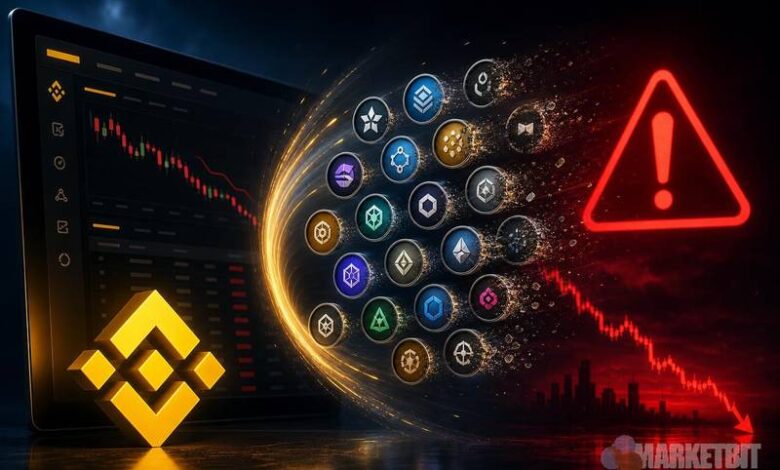
Binance is set to remove 20 tokens from its platform in a sweeping delisting action that affects multiple digital assets at once. The move, which targets tokens available through Binance Alpha, follows an internal review process and ranks among the larger batch delistings the exchange has carried out.
What to Know
- Binance is removing approximately 21 tokens from its Binance Alpha section after a review process.
- Affected tokens will lose trading access on Binance, though they may remain available on other platforms and blockchains.
- Holders should check Binance support announcements for specific timelines and withdrawal deadlines.
What Binance Announced About the Token Removals
Binance confirmed the delisting of 21 cryptocurrencies from its Binance Alpha offering following a periodic review. The removal covers tokens that no longer met the exchange’s listing standards.
The decision was also reported by Coinpedia, which noted the action came after an evaluation of project fundamentals and trading activity. Binance Alpha functions as a discovery section for newer tokens, and the exchange periodically culls assets that fail to maintain sufficient metrics.
Binance published the full details through its official support channel. Users holding any of the affected tokens should consult the Binance support announcement for the complete list and relevant deadlines.
What the Removals Mean for Traders and Holders
Once removed, these tokens will no longer be available for trading through Binance Alpha. Users who hold any of the delisted assets on Binance will need to withdraw them before the stated deadline or risk losing access to those balances on the platform.
It is important to note that a Binance delisting does not mean a token ceases to exist. The affected projects continue to operate on their respective blockchains, and tokens may still trade on decentralized exchanges or other centralized platforms. However, losing access to Binance, the world’s largest crypto exchange by volume, typically reduces a token’s liquidity and visibility.
Traders who hold positions in any of the affected assets should monitor their Binance notifications for pair-specific removal dates. In past delistings, Binance has provided a withdrawal window before fully disabling wallet functionality for the removed tokens.
Why This Delisting Matters Beyond the Affected Tokens
A batch removal of this size signals that Binance is actively enforcing quality standards across its token listings. For projects that remain listed, it serves as a reminder that continued compliance with Binance’s criteria, including trading volume thresholds, development activity, and regulatory standing, is not optional.
Exchange delistings from major platforms like Binance often ripple through the broader market. Smaller tokens that lose access to Binance’s user base can see sharp declines in trading volume and price discovery. The effect is particularly pronounced for tokens that relied heavily on a single exchange for the majority of their liquidity.
This pattern of periodic reviews and batch removals has become more common across major exchanges as the industry faces increasing regulatory scrutiny. Platforms that list tokens with questionable fundamentals or low activity face reputational and compliance risks, as recent developments around the new Federal Reserve chair’s pro-crypto stance continue to reshape how regulators view digital asset platforms.
For traders navigating these shifts, understanding how exchange-level decisions affect token access is as important as tracking price action. The broader crypto market, including assets like Ethereum and other major tokens, continues to move on its own fundamentals, but smaller projects face outsized impact from platform-level decisions like this one.
Projects focused on maintaining strong fundamentals and transparent development, such as those reporting measurable growth metrics like DeFi Development Corp’s recent 108% year-over-year growth, are better positioned to avoid delisting risk on major exchanges.
Binance has not indicated whether additional reviews are planned in the near term. Holders of smaller-cap tokens listed on the platform should treat this as a signal to assess the listing health of their holdings across all exchanges where they trade.
Disclaimer: This article is for informational purposes only and does not constitute financial or investment advice. Cryptocurrency and digital asset markets carry significant risk. Always do your own research before making decisions.