
Ripple has opened a new Middle East and Africa regional headquarters in the Dubai International Financial Centre, creating capacity to double its existing operations in the region as the UAE cements its position as a global crypto hub.
The company announced the expansion on April 30, 2026, noting that the new DIFC office will allow it to scale its regional team significantly. Ripple first established its MEA headquarters in Dubai in 2020, making this the latest step in a six-year commitment to the region.
Reece Merrick, who leads Ripple's Middle East operations, framed the move as a long-term bet on the region's trajectory.
"Our new regional headquarters is a reflection of our ongoing commitment to playing our part in the region's upward trajectory."
Reece Merrick, Ripple
Why Dubai Is Central to Ripple's Regional Push
The DIFC expansion is backed by a regulatory foundation that few crypto firms in the region can match. In March 2025, Ripple became the first blockchain-enabled payments provider licensed by the Dubai Financial Services Authority, giving it a regulated payments rail inside the financial centre.
Three months later, the DFSA formally recognised RLUSD as a crypto token for use in the DIFC, granting Ripple both a licensed infrastructure layer and an approved stablecoin for regulated firms operating in the zone. That combination of licensing and token recognition positions Ripple to serve institutional clients directly within Dubai's most prominent financial district.
The strategic logic extends beyond licensing. Around 20% of Ripple's global customer base already operates in the Middle East, making the region a core revenue geography rather than an emerging frontier. Expanding office capacity signals an intent to deepen coverage of that existing client base while pursuing new institutional relationships, similar to the pattern seen when Hashed reportedly secured an Abu Dhabi financial services license earlier this year.
UAE's $56 Billion Crypto Market Underpins the Timing
Ripple's expansion comes as institutional crypto activity in the UAE accelerates. A Chainalysis report found that the UAE received upward of $56 billion in crypto value during the 2024 to 2025 reporting window, with growth driven primarily by institutional rather than retail flows.
That volume positions the UAE as one of the largest crypto markets in the Middle East and North Africa region, and helps explain why cross-border payments firms like Ripple are scaling their physical presence there. Dubai's regulatory clarity, particularly within the DIFC framework, has made it a preferred base for international crypto firms seeking licensed operations in the Gulf.
XRP traded at $1.36 at press time, down roughly 0.6% over the prior 24 hours, with a market cap of approximately $84.2 billion.
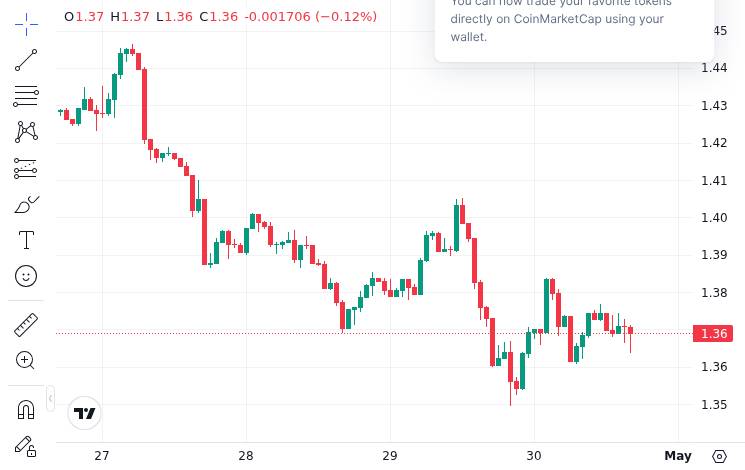
The broader crypto market reflected a cautious mood, with the Fear & Greed Index sitting at 29, firmly in "Fear" territory. That sentiment backdrop suggests Ripple's office expansion is a supply-side infrastructure play rather than a response to speculative market conditions.
What the Expansion Could Signal for Ripple's Next Phase
Headquarters expansions of this nature, particularly ones that double operational capacity, typically precede hiring surges across compliance, engineering, and business development functions. For Ripple, which has built its business model around regulated cross-border payments and institutional partnerships, a larger Dubai footprint could accelerate onboarding of banks and financial institutions across the Gulf and broader Africa corridor.
The move also fits a broader pattern of crypto infrastructure firms shifting capital allocation toward physical presence in jurisdictions with clear regulatory frameworks. While some firms have pursued licensing in Abu Dhabi or Bahrain, Ripple's bet on the DIFC gives it access to the largest cluster of regulated financial firms in the region.
Whether the capacity-to-double claim translates into proportional team growth will depend on Ripple's pipeline and broader market conditions. The company has not disclosed specific hiring targets or timelines beyond the office expansion itself. According to unconfirmed reports from a single secondary source, the hiring could span engineering, sales, compliance, and support functions, though Ripple has not confirmed that breakdown.
What is clear is that Ripple is treating the Middle East as a primary market, not a satellite. Six years after first planting a flag in Dubai, the company is doubling down on the region at a time when regulatory scrutiny of crypto operations globally is pushing firms toward jurisdictions that offer both clarity and scale.
Disclaimer: This article is for informational purposes only and does not constitute financial or investment advice. Cryptocurrency and digital asset markets carry significant risk. Always do your own research before making decisions.