
The crypto payment gateway models winning are the ones built around stablecoin-first checkout, regulated merchant processing, non-custodial wallet settlement, self-hosted sovereignty, and AI-ready API rails. The clearest platform leaders across those models are Stripe, CoinGate, NOWPayments, PayRam, MoonPay Commerce, and Triple-A.
That ranking is different from a simple top-processor list because the market is not moving in one direction. It is splitting. Some businesses want cleaner fiat-ready stablecoin settlement. Others want wallet control. Others want programmable rails for product-led commerce. The gateways winning are the ones that own one of those models clearly instead of trying to be everything at once.

Which Gateway Model Is Winning The Fastest?
The fastest-rising model is stablecoin-first checkout, led by Stripe, CoinGate, and parts of Coinbase Commerce. The most durable control-first model is still self-hosted or non-custodial settlement, led by PayRam and NOWPayments.
The Models To Watch
This article ranks models first and gateways second:
- stablecoin-first settlement
- regulated merchant processing
- non-custodial wallet settlement
- self-hosted sovereignty
- embedded and API-led commerce
1. Stablecoin-First Checkout: Stripe
Introduction
Stablecoin-first checkout is winning because merchants care more about predictable dollar-linked settlement than about long altcoin menus. Stripe leads this model by making stablecoin acceptance look like an extension of an existing business payments stack instead of a separate crypto experiment.
Pros
- 1.5% pricing
- fiat settlement in Stripe balance
- strong fit for SaaS and invoice-led businesses
- good API and billing support
Cons
- narrower merchant availability
- stablecoin-specific rather than broad-crypto
- not self-custody oriented
Quick Specs
- Fee: 1.5%
- Assets: USDC, USDP, USDG
- Networks: Ethereum, Solana, Polygon, Base
- Integration: Checkout, Elements, Payment Links, Invoicing, API
2. Regulated Merchant Processing: CoinGate
Introduction
CoinGate leads the regulated all-around merchant model because it combines transparent pricing, flexible settlement, and practical e-commerce integration without drifting too far into enterprise-only territory.
Pros
- 1% standard pricing
- payouts in fiat, stablecoins, or crypto
- plugins and API support
- easier for mainstream merchants to adopt
Cons
- weekly standard-plan settlement is slower than some merchants want
- stronger KYC and AML burden than crypto-native tools
- not designed for deep self-sovereignty
Quick Specs
- Fee: 1%
- Settlement: fiat, stablecoins, crypto
- Integration: plugins, API, billing, buttons
- Model: managed processor
3. Non-Custodial Wallet Settlement: NOWPayments
Introduction
NOWPayments leads the non-custodial wallet-settlement model because it gives merchants direct wallet-level receipt, broad token coverage, and relatively low headline fees without requiring a full self-hosted deployment.
Pros
- 0.5% fee
- non-custodial payouts
- broad token and chain support
- subscriptions, POS, and payout tooling
Cons
- extra 0.5% exchange fee can apply
- less polished for large compliance-heavy businesses
- more tool-oriented than processor-oriented
Quick Specs
- Fee: 0.5% plus 0.5% exchange if needed
- Model: non-custodial
- Integration: API, invoices, subscriptions, plugins, POS
- Asset coverage: 100+ currencies
4. Self-Hosted Sovereignty: PayRam
Introduction
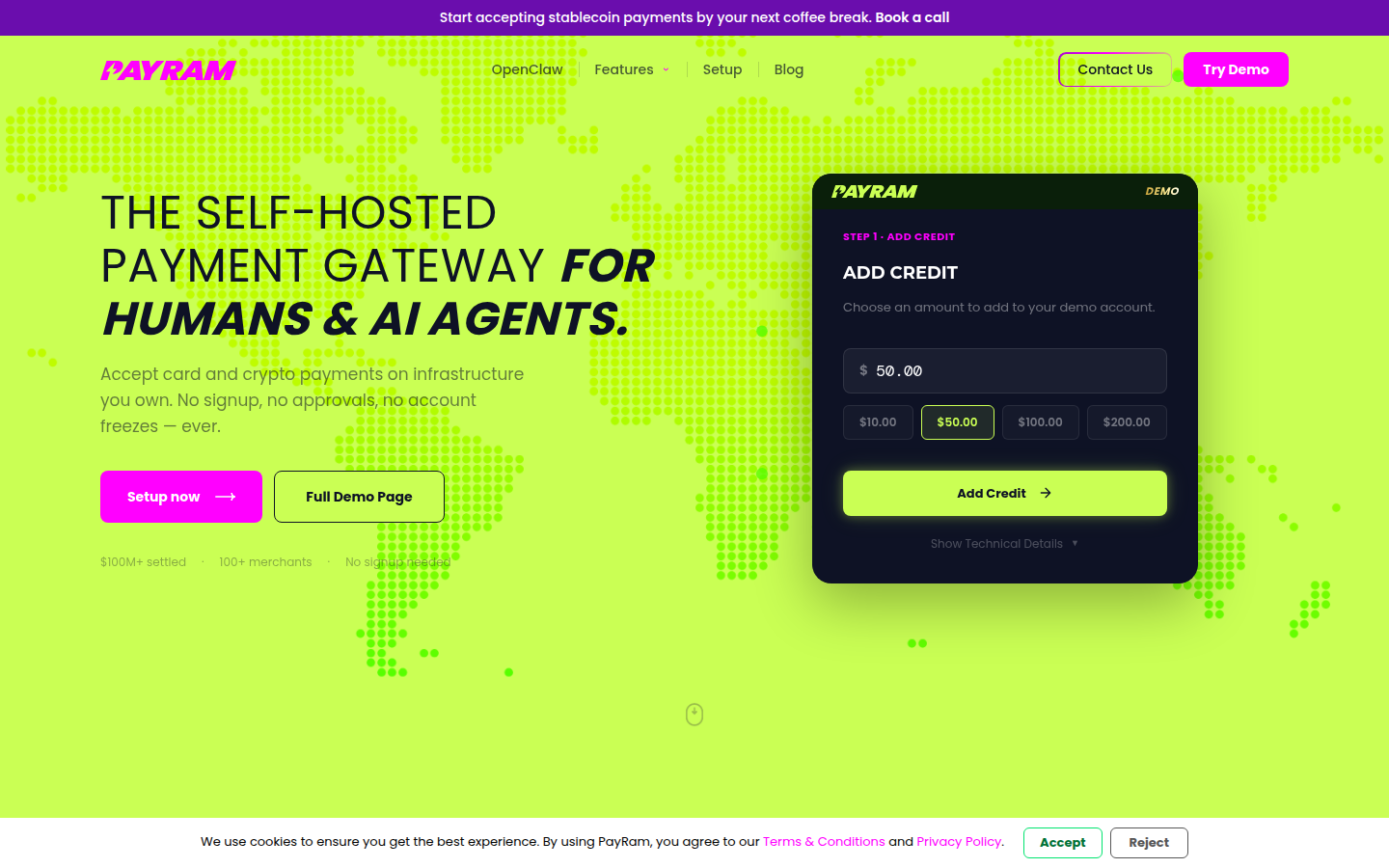
PayRam leads the self-hosted sovereignty model because it is one of the clearest examples of a gateway that treats control as a primary feature rather than a side option. That makes it structurally different from processor-led platforms.
Pros
- self-hosted and self-custody design
- no signup and no gateway-level KYC in its own positioning
- multi-chain support
- strong fit for API-heavy or agent-forward commerce
Cons
- operational burden is higher
- no simple public merchant fee sheet
- not a turnkey compliance-led answer
Quick Specs
- Fee: not simply disclosed
- Model: self-hosted, self-custody
- Assets: BTC, ETH, USDT, USDC, TRX, cbBTC, POL
- Integration: APIs, links, payouts, MCP
5. Embedded And API-Led Commerce: MoonPay Commerce
Introduction
MoonPay Commerce leads the embedded-commerce model because it looks more like a commerce platform than a narrow processor. SDKs, widgets, deposits, subscriptions, and creator flows make it stronger where product teams want to weave payments directly into the experience.
Pros
- strong SDK and widget surface
- optional fiat offramp
- good fit for creators, apps, and digital products
- broad commerce tooling
Cons
- standard fee is not low
- fee stack grows with swaps and offramp usage
- less conservative than processor-first rivals
Quick Specs
- Fee: 2%, or 1% with HelioX
- Extra fees: swaps 0.25%; auto-offramp 0.50%
- Model: managed commerce platform
- Integration: SDKs, API, widgets, pay links, Shopify
6. Compliance-First Processor Expansion: Triple-A
Introduction
Triple-A rounds out the list because compliance-first processing is still winning in parts of the market where wallet support, fiat settlement, and business verification matter more than experimental flexibility.
Pros
- strong stablecoin and wallet support
- fiat or crypto settlement
- clear KYB-led business model
- useful for businesses that want processor-led support
Cons
- public pricing is not simple
- less naturally suited to small self-serve merchants
- not the strongest self-custody or developer-first option
Quick Specs
- Fee: not publicly disclosed
- Model: managed processor
- Settlement: fiat or crypto
- Integration: processor-led service with API support
Final Take
The crypto payment gateway models winning are not winning for the same reason. Stripe is winning because stablecoin settlement is becoming part of ordinary payments infrastructure. CoinGate is winning because regulated merchant processing still matters. NOWPayments is winning because direct wallet control still matters. PayRam is winning because sovereignty still matters. MoonPay Commerce is winning because embedded digital commerce is expanding. Triple-A is winning because compliance remains a commercial requirement, not a footnote.
That is the market shift. The category is not consolidating into one perfect gateway. It is specializing into better-defined payment models.
References
- Stripe. Stablecoin Payments
- CoinGate. Pricing
- NOWPayments. Pricing
- PayRam. Introduction
- MoonPay Commerce. Pricing & Fees
- Triple-A. What Services Does Triple-A Provide
Disclaimer: This article is for informational and editorial purposes only and does not constitute legal, tax, or financial advice. Businesses should verify the latest provider terms, onboarding rules, and supported jurisdictions before deployment.