
Binance will remove the XRP/TUSD spot trading pair on April 2, pulling a low-liquidity pairing off its books while the broader crypto market sits deep in Extreme Fear territory, Bitcoin trades below $68,000, and Ripple confirms a new institutional partnership under Singapore's central bank.
Binance Pulls the XRP/TUSD Pair on April 2
Binance announced it will remove and cease trading on the XRP/TUSD spot pair at 2026-04-02 03:00 UTC. Spot Trading Bots services for the affected pair will shut down at the same time.
The move is a pair delisting, not a broader removal of either token. XRP and TUSD both remain available on Binance Spot through other active trading pairs, so holders do not need to withdraw or convert solely because of this change.
Binance periodically reviews its listed spot pairs based on liquidity and trading volume criteria. Traders running automated strategies on XRP/TUSD should migrate their bots to an alternative XRP pair before the April 2 cutoff. The exchange's decision follows a pattern of trimming stablecoin pairings that no longer attract sufficient market-making depth, similar to moves that have previously reshaped trading routes across the XRP ecosystem.
Schiff's Bitcoin Warning Resurfaces in an Extreme Fear Market
The original roundup headline referenced an "85% prediction" tied to Bitcoin's most vocal critic. The closest verifiable attribution comes from FXLeaders, which reported that Peter Schiff warned Bitcoin could fall toward $20,000 if the $50,000 support level fails. That scenario would represent roughly an 84% drawdown from the cited cycle high, not an independently verified exact 85% figure.
Schiff argued that investors should sell rather than buy any dip below the $50,000 threshold. The warning, first covered in February, is circulating again as sentiment deteriorates sharply.
Bitcoin traded at $67,150 at press time, down 0.76% over the prior 24 hours, with a market cap of roughly $1.34 trillion and about $51.12 billion in daily volume.
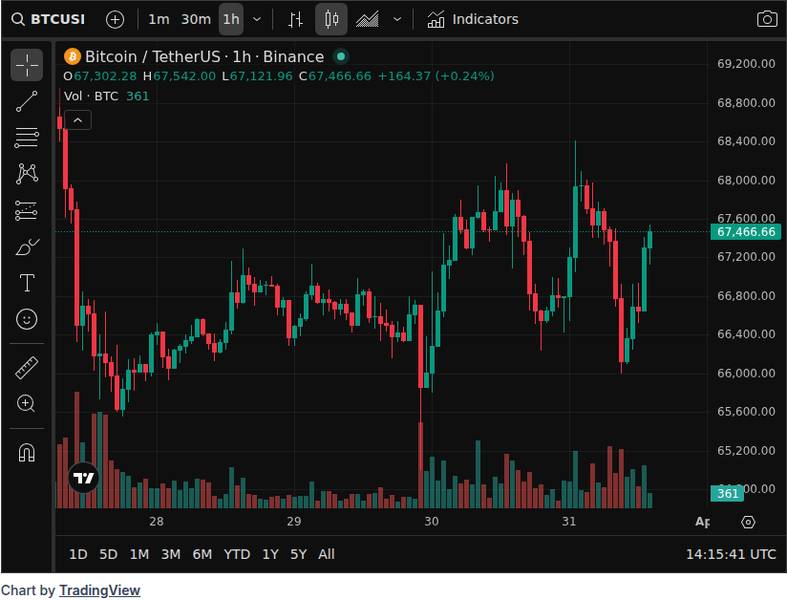
The Fear & Greed Index printed 11 out of 100 on March 31, classified as Extreme Fear. That reading sits well below the neutral 50 mark and signals broad risk aversion among retail participants.
XRP itself traded at $1.33, down 1.47% over 24 hours, with roughly $81.36 billion in market cap and about $2.00 billion in daily volume. The soft tone across both assets adds context to why bearish forecasts are gaining traction in social feeds, even when the underlying analysis dates back weeks. For traders looking to evaluate conditions beyond headline prices, metrics like funding rates, exchange reserves, and on-chain velocity can offer a more granular read on positioning.
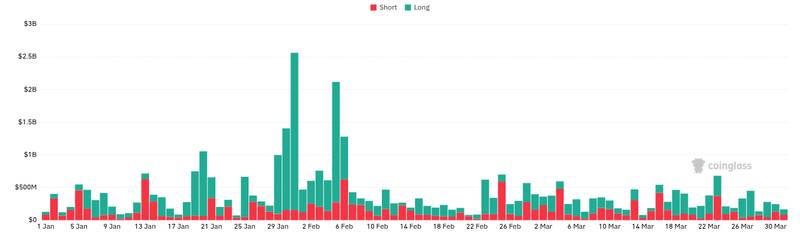
Schiff's $20,000 scenario remains a conditional call, not a time-bound forecast. It depends entirely on a sustained break below $50,000, a level Bitcoin has not tested during this current drawdown. The gap between the current $67,150 price and that trigger zone is still significant, though the prevailing fear reading suggests traders are not dismissing downside scenarios outright. Broader sentiment around Bitcoin's trajectory has drawn renewed commentary from public figures, including recent claims about Elon Musk's evolving stance on Bitcoin.
Ripple's Verified Move Is MAS BLOOM, Not "Standard C..."
The roundup headline's truncated "Ripple Joins Standard C..." fragment could not be fully verified from available evidence. The confirmed Ripple development is its participation in the Monetary Authority of Singapore's BLOOM initiative.
Ripple announced it joined MAS's BLOOM initiative and partnered with UNLOQ to advance programmable settlement infrastructure in trade finance. The partnership targets regulated payment rails rather than speculative token activity.
BLOOM is a Singapore-backed framework focused on cross-border settlement modernization. Ripple's involvement positions the company inside a compliance-first infrastructure project overseen by one of Asia's most influential financial regulators.
The UNLOQ partnership specifically targets trade finance, an area where programmable settlement can reduce clearing times and counterparty risk. This is an institutional infrastructure play, distinct from the token-delisting and price-action narratives elsewhere in the roundup.
Ripple's pivot toward regulated settlement work in Singapore adds to a broader pattern of the company embedding itself in government-backed financial infrastructure projects. The April 2 Binance pair removal, meanwhile, is a narrow housekeeping action that does not change XRP's exchange availability. Both developments land in a market where fear dominates and traders are watching support levels more closely than partnership announcements.
Disclaimer: This article is for informational purposes only and does not constitute financial or investment advice. Cryptocurrency and digital asset markets carry significant risk. Always do your own research before making decisions.