Flare, a blockchain network built to expand the utility of assets like XRP, has confirmed it is broadening its strategy to include Bitcoin. CEO Hugo Philion has framed the move not as an abandonment of XRP but as a natural expansion of the FAssets protocol, which creates trust-minimized wrapped tokens for non-smart-contract chains.
Some commentators have characterized the shift as a "Bitcoin U-turn," though according to unconfirmed reports, no primary or secondary source used that exact phrase. Flare's own timeline shows Bitcoin support has been in development since at least mid-2024, raising questions about whether "U-turn" overstates what is better described as a roadmap expansion.
What Flare's Bitcoin U-Turn Means
Flare added TestBTC bridging to its Coston testnet on September 3, 2024, allowing users to mint and redeem FTestBTC during the FAssets open beta. The announcement confirmed that once FAssets reaches mainnet, BTC holders will be able to mint FBTC for DeFi uses including trading, lending, borrowing, and bridging.
FAssets is Flare's trust-minimized bridge protocol. According to the project's official developer documentation, it creates wrapped tokens for assets on chains that lack native smart contract support, specifically BTC (as FBTC), XRP (as FXRP), and DOGE (as FDOGE).
By October 2024, the FAssets open beta had attracted more than 40,000 participants who completed 450,000 mint and redeem transactions. Testnet totals reached 48 million FXRP and 6.85 FBTC minted on Coston.
WHAT TO KNOW
- Flare is adding Bitcoin (FBTC) to its FAssets protocol, which already supports XRP and DOGE in beta, with CEO Hugo Philion confirming the expansion.
- This is not a sudden pivot. Bitcoin testnet support launched in September 2024, and BTC has been part of Flare's public roadmap alongside XRP for months.
- XRP remains central to Flare's strategy. Philion's own statements position Bitcoin as an addition, not a replacement, with Flare's goal being to bring XRP utility closer to the yield options Bitcoin already enjoys.
Why Flare's Shift Matters for the XRP Ecosystem
Flare's origins are tightly linked to XRP. In a February 5, 2026 announcement for the Hex Trust partnership, Philion stated that Flare was built to expand the utility of digital assets, starting with XRP. That integration is already live for institutional FXRP minting and FLR staking.
"Flare was built to expand the utility of digital assets, starting with XRP."
— Hugo Philion, CEO of Flare, via Flare's Hex Trust announcement
The same announcement explicitly stated that Flare will roll out support for additional non-smart-contract assets such as BTC. This positions Bitcoin not as a replacement for XRP within Flare's ecosystem, but as the next asset in a multi-chain expansion roadmap. Readers following the XRP bear trap narrative should note that Flare's XRP infrastructure remains its production flagship.
In a January 2026 interview summarized by KuCoin, Philion argued that Bitcoin already has many yield-generating options while XRP still lags behind. His framing cast Flare's mission as bringing XRP utility closer to Bitcoin's level, reinforcing that XRP remains central even as Bitcoin capabilities are added.
A December 8, 2024 Thinking Crypto interview with Philion discussed FAssets launch timing for FXRP, FDOGE, and FBTC, confirming that all three assets have been on the roadmap in parallel for months. The "U-turn" framing overstates the abruptness of a transition that Flare's public communications show has been incremental.
What Comes Next After the CEO Confirmation
The confirmed next steps center on mainnet deployment. Flare's September 2024 beta announcement described FBTC as a product that will go live once FAssets reaches mainnet, with BTC holders able to mint FBTC for full DeFi participation. Bifrost Wallet already supports FBTC participation in beta.
The institutional channel is also expanding. The Hex Trust integration gives regulated custodians a path to offer FXRP minting and FLR staking today, with BTC support explicitly named as a coming addition. For institutional players already exploring renewed Bitcoin interest from high-profile figures, Flare's custody-grade bridge could become a relevant infrastructure layer.
Bitcoin currently trades near $66,696 with a market cap of $1.33 trillion, while the Fear & Greed Index sits at 11, deep in "Extreme Fear" territory.
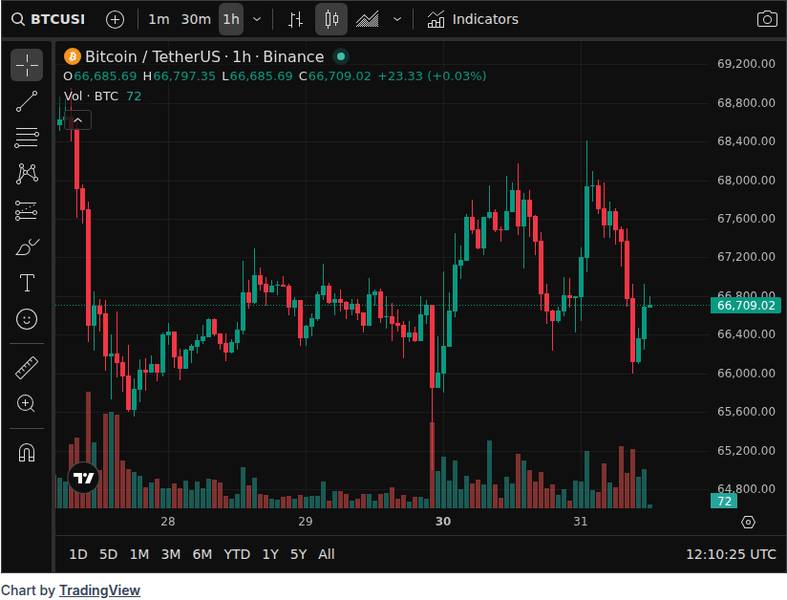
The practical question is whether FBTC on Flare mainnet can compete with existing wrapped Bitcoin products like WBTC, tBTC, and cbBTC. Flare's pitch rests on its trust-minimized architecture and native oracle infrastructure, but the market for wrapped BTC is already crowded. Anyone looking to track Bitcoin through metrics beyond price will find Flare's cross-chain minting activity an increasingly relevant data point.
Two areas to monitor: the mainnet FAssets launch date, which Flare has not publicly confirmed, and whether institutional demand via Hex Trust translates into meaningful FBTC minting volume once Bitcoin support goes live. The beta's 6.85 FBTC on testnet is a proof of concept, not a measure of production demand.
Disclaimer: This article is for informational purposes only and does not constitute financial or investment advice. Cryptocurrency and digital asset markets carry significant risk. Always do your own research before making decisions.